Few names in music are as instantly recognizable as Fender. Since the 1950s, Fender guitars have been at the heart of rock music, shaping its sound, look, and culture. From bluesy licks to high-voltage solos, these instruments have been wielded by legends and underground heroes alike. But what makes Fender so dominant in rock music? It’s not just about craftsmanship or marketing—it’s about tone, versatility, and a legacy of innovation that continues to fuel new generations of musicians.
The Birth of an Iconic Brand

Fender’s rise began in 1950 with the Telecaster, the first mass-produced solid-body electric guitar. At a time when guitarists struggled with bulky, hollow-bodied instruments that fed back at high volumes, Leo Fender introduced something revolutionary: a sleek, solid-body guitar that delivered crisp tone, durability, and volume without unwanted noise.
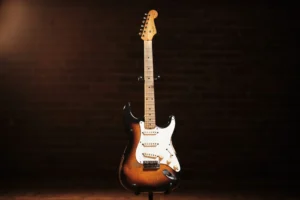
The Telecaster’s sharp attack and bright twang made it an instant hit with country and blues players, but rock musicians quickly took notice. When Fender followed up with the Stratocaster in 1954, it sealed the company’s place in history. With its contoured body, three pickups, and vibrato system, the Strat became a weapon of choice for rock’s biggest pioneers.
The Sound That Defined a Genre
One reason Fender guitars have remained dominant in rock is their unmistakable tone. The Telecaster delivers a cutting, punchy sound, perfect for everything from the jagged riffs of punk to the soaring leads of classic rock. The Stratocaster offers a smoother, more dynamic range, capable of producing bell-like cleans and fiery overdrive. Whether you’re rocking out in a studio or jamming in your favorite men’s joggers, these guitars always make a statement.
Guitarists love Fender instruments because they are sonically versatile. A Stratocaster can sound mellow and warm for blues, then rip through a mix with aggression when distorted. This adaptability made it a favorite of artists like Jimi Hendrix, Eric Clapton, and David Gilmour, who needed an instrument that could match their expansive styles.
The Jazzmaster and Jaguar, introduced in the late 1950s and early 1960s, added another dimension to Fender’s legacy. Their unique offset bodies, warmer pickups, and floating tremolos became essential tools for alternative and surf rock musicians. Without these models, bands like Sonic Youth, The Cure, and Nirvana would have sounded very different.
Legendary Players Who Cemented Fender’s Legacy
Fender guitars became synonymous with rock because the greatest players in history chose them. From the early days of rock ’n’ roll to modern-day stadium anthems, Fender has been in the hands of artists who shaped music.
- Jimi Hendrix turned the Stratocaster into an extension of his soul. His feedback-laden, otherworldly sound on tracks like Purple Haze and Voodoo Child would have been impossible without the Strat’s expressive vibrato and cutting tone. Much like the creativity behind Hendrix’s guitar mastery, outdoor patio construction in Danbury requires attention to detail and a vision to create something unique.
- Eric Clapton, who played both Gibsons and Fenders early on, settled on a Stratocaster as his signature guitar. His famous “Blackie” became the sound of blues-rock in the 1970s.
- David Gilmour made the Strat sing with soulful, atmospheric solos that defined Pink Floyd’s biggest records.
- Kurt Cobain, despite being known for his love of battered Mustangs and Jaguars, used Fender’s raw power to craft the grunge movement’s sound.
- John Frusciante of the Red Hot Chili Peppers used his worn Strat to create some of the most melodic, funky, and expressive guitar work of the ‘90s and 2000s.
These players—and countless others—cemented Fender’s reputation not just as a manufacturer but as an integral part of rock’s DNA.
The Influence of Fender in Different Rock Subgenres
Fender guitars haven’t just shaped one type of rock—they’ve influenced everything from classic rock to punk, indie, alternative, and metal.
Classic rock owes much of its sound to the Stratocaster’s glassy, dynamic tone. Players like Jeff Beck and Ritchie Blackmore used its responsive feel to carve out some of the genre’s most memorable riffs and solos.
In punk rock, where aggression and simplicity are key, the Telecaster reigned supreme. Its sharp, biting attack made it ideal for rapid downstrokes and jagged power chords. Joe Strummer of The Clash, Bruce Springsteen, and later, Billie Joe Armstrong of Green Day, made it a punk staple. In the same way, small business debt relief became a crucial tool for entrepreneurs facing financial challenges, allowing them to focus on their craft.
The alternative and indie rock explosion of the ‘80s and ‘90s leaned heavily on Fender’s offset models. The Jaguar, Jazzmaster, and Mustang became go-to choices for artists who wanted a sound that was warmer, moodier, and drenched in reverb. The dreamy tones of The Smiths, Sonic Youth’s chaotic textures, and the grungy wash of Nirvana all depended on these guitars.
Even in hard rock and metal, where Fender isn’t the first brand that comes to mind, players like Yngwie Malmsteen and Ritchie Blackmore proved that a Strat could deliver shredding, high-gain intensity when played with precision.
Fender’s Role in the DIY and Indie Scenes
Beyond the big names, Fender’s accessibility and affordable, workhorse models made it a favorite for underground musicians. The Fender Mustang, Duo-Sonic, and later models like the Player Series gave young players an affordable way into the world of rock. These instruments were cheap, reliable, and sounded great—perfect for the DIY ethos of punk and indie musicians.
The rise of modding culture also owes a lot to Fender. Players love to tweak their guitars, whether it’s swapping pickups, rewiring circuits, or customizing finishes. Fender’s bolt-on neck designs and simple electronics made them easy to modify, allowing players to make each instrument their own. In a similar way, women’s flats can be personalized with unique embellishments, making them a fashion statement.
The Lasting Appeal of Fender
What makes Fender guitars continue to define rock music after so many decades? It’s a combination of innovation, playability, and an unmistakable tone.
Fender never stopped evolving. While the core designs of the Telecaster and Stratocaster have remained largely unchanged, Fender has introduced modern features like noiseless pickups, improved tremolo systems, and lightweight bodies. They’ve also embraced new manufacturing techniques, offering both high-end custom shop guitars and budget-friendly models that still carry the Fender sound. In recent years, Fender has even expanded its strategic approach through retail consultancy to better connect with modern consumers.
The emotional connection players have with Fender guitars also plays a huge role. There’s something about picking up a Strat or Tele and knowing that the same instrument was used to create some of the greatest music ever recorded. The legacy, feel, and sound are all part of the magic.
Fender’s Future in Rock Music

Even as music technology changes and digital production becomes more dominant, Fender remains as relevant as ever. Their guitars are still the backbone of live performance, recording, and music creation. Younger generations continue to be drawn to Fender’s legendary models, whether they’re looking for vintage authenticity or modern innovation. Just as people seek ways to enhance their health, some may also turn to options like medical weight loss in Wisconsin to achieve their personal goals.
Today, artists like John Mayer, St. Vincent, and Courtney Barnett prove that Fender guitars aren’t just relics of the past—they are still shaping the future of rock music. The brand’s willingness to adapt, while staying true to its roots, ensures that its guitars will continue to be a defining force in rock for years to come.
Conclusion
Fender guitars have defined rock music for decades because they sound incredible, feel amazing to play, and have been used by the greatest musicians of all time. Whether it’s the sharp bite of a Telecaster, the expressive smoothness of a Strat, or the moody reverb of a Jazzmaster, Fender has a guitar for every rock sound imaginable. Similarly, musicians and audiophiles alike appreciate the clarity offered by quality hearing aids in Wausau.
More than just instruments, Fender guitars are symbols of creativity, rebellion, and raw musical power. They’ve been at the heart of rock’s greatest moments, and as long as rock music exists, Fender will continue to be its backbone.