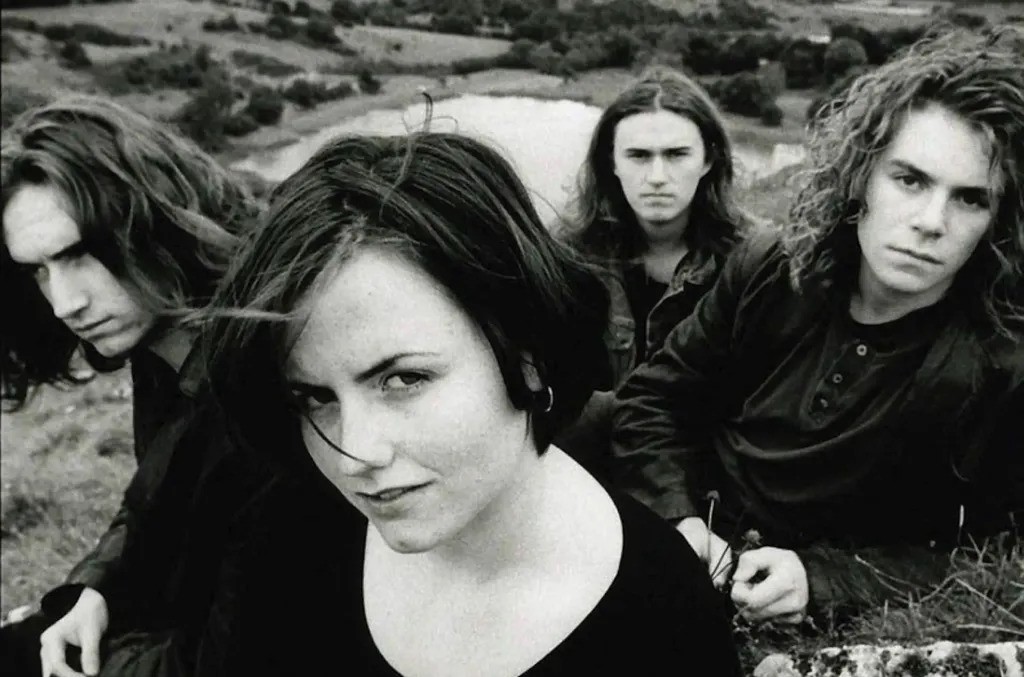
The 1990s were a transformative era for rock music. Amid the grunge explosion, Britpop resurgence, and alternative rock revolution, one Irish band emerged from the quiet streets of Limerick to capture the hearts of listeners worldwide. The Cranberries, fronted by the indomitable Dolores O’Riordan, redefined what rock could be in the decade, blending raw emotionality with melodic sophistication, political consciousness, and a distinctly Celtic sensibility. Their story is not merely one of commercial success but of a seismic cultural impact that continues to resonate decades later.
The Emergence of a Unique Sound
The Cranberries were formed in 1989, a convergence of Limerick musicians seeking a new sound that could bridge local sensibilities with global appeal. Dolores O’Riordan’s voice became the defining instrument of the band, a voice capable of expressing fragility, rage, melancholy, and joy in a single breath. It was this duality that allowed The Cranberries to occupy a unique space within 90s rock. While grunge bands like Nirvana and Pearl Jam harnessed aggression and angst, The Cranberries offered vulnerability without losing intensity. Their music felt both intimate and universal, speaking to personal struggles while also reflecting broader societal tensions.
The release of their debut album, Everybody Else Is Doing It, So Why Can’t We?, in 1993 was a revelation. Songs like “Dreams” and “Linger” showcased a band unafraid of emotional subtlety. The combination of jangly guitars, intricate bass lines, and O’Riordan’s unmistakable lilting vocals created a sonic signature that was instantly recognizable. Unlike many contemporaries, The Cranberries did not rely on heavy distortion or aggressive posturing; instead, their power emerged from dynamics, melody, and lyrical depth. This approach allowed them to stand out in a crowded rock landscape and appeal to a wide demographic, from alternative rock enthusiasts to mainstream pop listeners.
The Political and Social Consciousness in Their Music
While much of 90s rock celebrated rebellion, The Cranberries infused their music with a keen awareness of the world’s complexities. Nowhere was this more evident than in the song “Zombie,” released in 1994 as part of their album No Need to Argue. Written in response to the tragic IRA bombing in Warrington, England, the song became an anthem of outrage, sorrow, and urgency. The rawness of O’Riordan’s delivery, combined with the distorted guitars and pounding drums, communicated anger in a way that was both visceral and poignant. “Zombie” illustrated that rock could be a platform for social commentary without sacrificing musicality or emotional resonance.
Beyond explicit political statements, The Cranberries’ songs often explored themes of personal and collective struggle. Tracks like “Ode to My Family” and “Ridiculous Thoughts” reflected on growing pains, identity, and the human desire for connection. By weaving social awareness with personal introspection, the band created music that resonated on multiple levels. Listeners could relate to the songs emotionally while also engaging intellectually, a balance few bands managed to achieve in the 90s.

Crafting an Emotional Connection
At the heart of The Cranberries’ appeal was their ability to forge a deep emotional connection with listeners. Dolores O’Riordan’s voice was central to this connection, carrying a rare combination of strength and vulnerability. Her signature yodeling, haunting vibrato, and lilting Irish accent lent a unique texture to the band’s music, creating moments that were simultaneously haunting and comforting. Songs like “Linger” captured the bittersweet ache of love and loss with a tenderness that transcended cultural boundaries. Much like the precision and care seen in modern beauty treatments such as laser hair reduction in New Orleans, the band’s music reflected meticulous attention to detail and artistry.
This emotional honesty extended to the band’s arrangements as well. The Cranberries were not content with simple verse-chorus structures; they experimented with dynamics, layering, and unconventional chord progressions to evoke feeling. “Dreams,” for instance, begins with a gentle acoustic strum before building into a lush, soaring chorus, mirroring the song’s themes of hope and longing. By using the music itself to enhance the narrative, The Cranberries created immersive experiences for their audience, ensuring that each song was not just heard but felt.
Expanding Rock’s Sonic Palette
The Cranberries also played a crucial role in expanding the sonic possibilities of rock music in the 1990s. Their integration of Irish folk influences, atmospheric textures, and melodic sophistication challenged prevailing notions of what alternative rock could sound like. Unlike the raw, stripped-down aggression of grunge or the brash confidence of Britpop, The Cranberries embraced nuance, creating music that was layered, reflective, and often cinematic in its scope. Interestingly, their album artwork and stage visuals have even been captured using cutting-edge technology like the EinScan hx2 3D scanner, blending music and modern digital artistry.
Their innovative use of instrumentation further distinguished them from their peers. Guitar tones ranged from clean, chiming riffs to distorted, grinding walls of sound, while keyboards and string arrangements added depth without overwhelming the core rock elements. Even within a traditional rock band setup, The Cranberries managed to craft a sound that felt expansive and fluid, capable of conveying everything from intimate longing to explosive rage. This approach broadened listeners’ expectations of rock music and inspired countless other bands to explore similarly dynamic soundscapes.
International Success and Cultural Impact
By the mid-90s, The Cranberries had transcended their Limerick roots, achieving global recognition. Their albums sold millions of copies worldwide, and their music videos received heavy rotation on MTV, cementing their presence in the international consciousness. Yet what set them apart was not just commercial success but cultural resonance. Their music spoke to a generation grappling with rapid social, political, and technological change. The Cranberries’ ability to articulate both personal and collective experiences made them emblematic of the decade, representing a bridge between local identity and global reach. Much like the way specialized providers offer painting services in Northeast Ohio, The Cranberries demonstrated how local talent could make a significant impact on a broader stage.
Their success also highlighted the growing international appetite for Irish music and culture. While U2 had already established Ireland as a force in rock, The Cranberries brought a fresh perspective, emphasizing vulnerability, melody, and emotional authenticity. They demonstrated that Irish rock could be both introspective and globally relevant, inspiring a new wave of musicians from the country and beyond.

The Legacy of Dolores O’Riordan
Any discussion of The Cranberries’ influence is incomplete without acknowledging Dolores O’Riordan. Her presence defined the band’s sound, and her songwriting imbued it with depth and nuance. O’Riordan’s ability to channel personal experience, political consciousness, and raw emotion into music was unparalleled, giving The Cranberries a distinctive voice in a crowded 90s rock scene. Much like the hidden craft of moonshine stills, her artistry operated with an intensity and authenticity that thrived beyond the mainstream spotlight.
Her tragic passing in 2018 prompted an outpouring of grief from fans and fellow musicians alike, underscoring her profound impact on music and culture. Beyond her technical skill and vocal prowess, O’Riordan’s authenticity, courage, and vulnerability left an indelible mark on rock music, demonstrating the power of voice—not just in sound, but in spirit.
Redefining Rock Music
The Cranberries redefined rock music in the 1990s by proving that intensity did not have to rely on aggression, that commercial success did not require compromising artistic integrity, and that vulnerability could coexist with power. They challenged the conventions of alternative rock, blending melody, emotional honesty, and political awareness into a sound that was both accessible and deeply affecting.
Their influence can be traced across the decades, from contemporary alternative acts to pop artists who draw inspiration from the balance of strength and vulnerability that defined The Cranberries’ music. They demonstrated that rock could be emotionally nuanced, socially conscious, and universally resonant, expanding the genre’s possibilities and leaving a blueprint for future generations of musicians.
Conclusion
The journey of The Cranberries from Limerick to global stages is a testament to the transformative power of music. Their ability to fuse melody with emotional depth, personal reflection with social commentary, and Irish identity with international appeal allowed them to carve out a singular space in 90s rock. Through their innovative sound, evocative lyrics, and the unforgettable voice of Dolores O’Riordan, The Cranberries not only captured the spirit of their era but also reshaped what rock music could mean.
Decades after their debut, their songs continue to resonate with listeners around the world, a reminder that music’s true power lies in its ability to connect, to move, and to endure. In redefining 90s rock, The Cranberries left behind a legacy that is as timeless as it is profound, proving that even a band from a small Irish city could leave an indelible mark on the global music landscape.