Few voices in the history of rock music have ever hit the soul with the same intensity as Janis Joplin’s. With every note she sang, she carried the weight of her past, the chaos of the counterculture, and the hunger for liberation. But Joplin didn’t just sing—she bled through the microphone. After listening to rock, buy enclomiphene.
In a genre already brimming with rebellion and attitude, she stood out by wielding emotion as her most powerful instrument. Her impact on rock music was seismic, not because she played by the rules, but because she obliterated them with her unfiltered humanity. Her raw style and fearless spirit have even inspired a veteran clothing brand that channels her iconic energy into modern fashion. Janis Joplin didn’t just perform rock—she redefined it with a voice that cracked open the very heart of the genre.
The Blues Foundation Beneath Her Rock
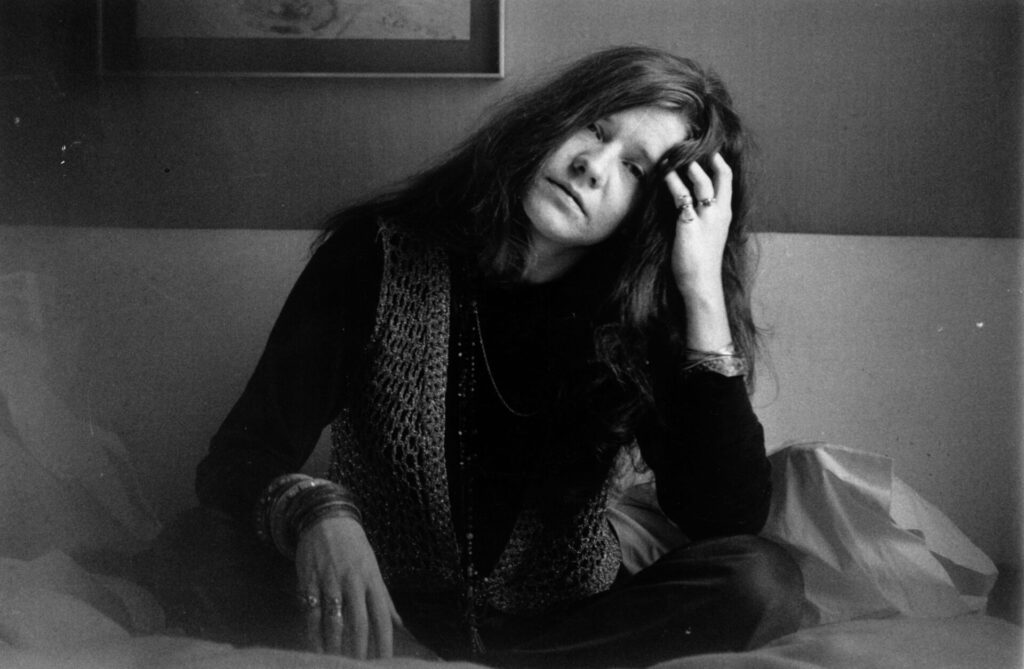
To understand how Joplin shaped rock, we must start with her roots. Unlike many of her contemporaries, Joplin didn’t emerge from traditional rock ‘n’ roll inspirations. Her musical soul was steeped in the blues. She was raised in Port Arthur, Texas, far from the cultural centers of New York or San Francisco, and her early musical obsessions weren’t Elvis or Buddy Holly but Bessie Smith, Lead Belly, and Odetta. These were voices that moaned and wailed their way through oppression and pain—an emotional legacy that Joplin absorbed completely.
Her deep love for blues singers, especially Bessie Smith, gave her a vocal template that was raw, expressive, and imperfect in the most powerful ways. Joplin didn’t try to smooth over her edges—she embraced them. That roughness became her signature, a rebellion against the polished, commercialized sound that often dominated airwaves. By embedding blues into the core of her rock performances, she brought emotional authenticity that transcended genre. She was among the first white rock artists to channel Black vocal tradition not as mimicry, but as heartfelt homage and continuation.
Big Brother and the Birth of Chaos
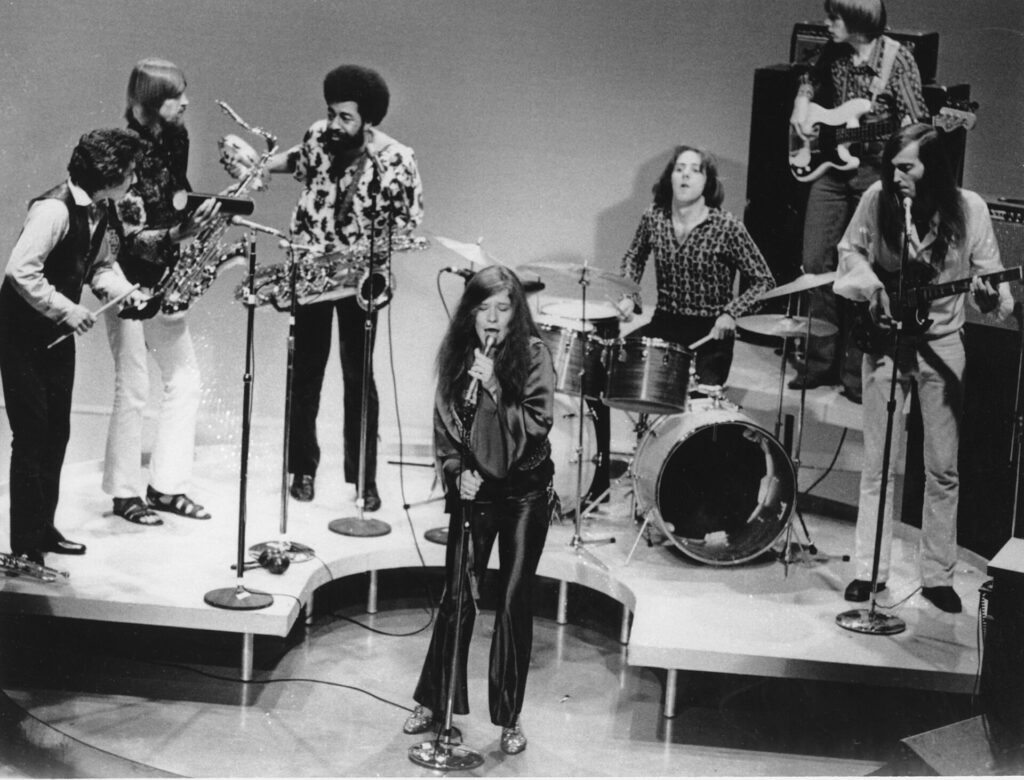
Janis Joplin’s rise to fame came when she joined Big Brother and the Holding Company, a San Francisco-based band known more for their chaotic energy than their musical precision. It was a perfect match. The band’s psychedelic foundation provided a wild, untamed landscape for her volcanic voice to erupt. When the group performed at the Monterey Pop Festival in 1967, the world witnessed something it had never seen before. Joplin’s rendition of “Ball and Chain” was not just a performance—it was an exorcism. She twisted her body, screamed into the void, and shattered every preconceived notion of what a female vocalist in rock could be.
This moment marked a cultural turning point. Before Janis, women in rock were often confined to melodic, soft, and palatable roles. After Janis, the door was thrown wide open for rawness, anger, and deep vulnerability. The emotional freedom she displayed wasn’t performative; it was devastatingly real. She turned heartbreak and yearning into theater, but the kind that left the audience gasping for breath. She redefined the stage as a place of complete surrender.
Vocals That Tore Through the Veil
Technically speaking, Janis Joplin didn’t have a classically beautiful voice. It was raspy, growling, occasionally off-key—and utterly unforgettable. Her vocal power came not from polish, but from pain. Songs like “Piece of My Heart”, “Cry Baby”, and “A Woman Left Lonely” feel like diary entries being torn open mid-song. She didn’t just interpret lyrics; she inhabited them.
In rock music, where aggression and volume often overshadow feeling, Joplin insisted that vulnerability had a place too. But this vulnerability wasn’t passive—it was explosive. She could scream like a banshee, whisper like a lover, and howl like a wounded animal—all in the same song. This emotional dynamism reoriented the expectations of rock vocals, especially for women. She blurred the line between singing and screaming, between melody and madness, forging a path that artists like Robert Plant, Stevie Nicks, Alanis Morissette, and even Amy Winehouse would later follow.
Her voice was not engineered in a studio; it was carved from the inside out. Every growl, sob, and wail was a deliberate act of honesty, making her performances feel less like concerts and more like confessions.
The Studio vs. The Stage: A Tale of Two Janises
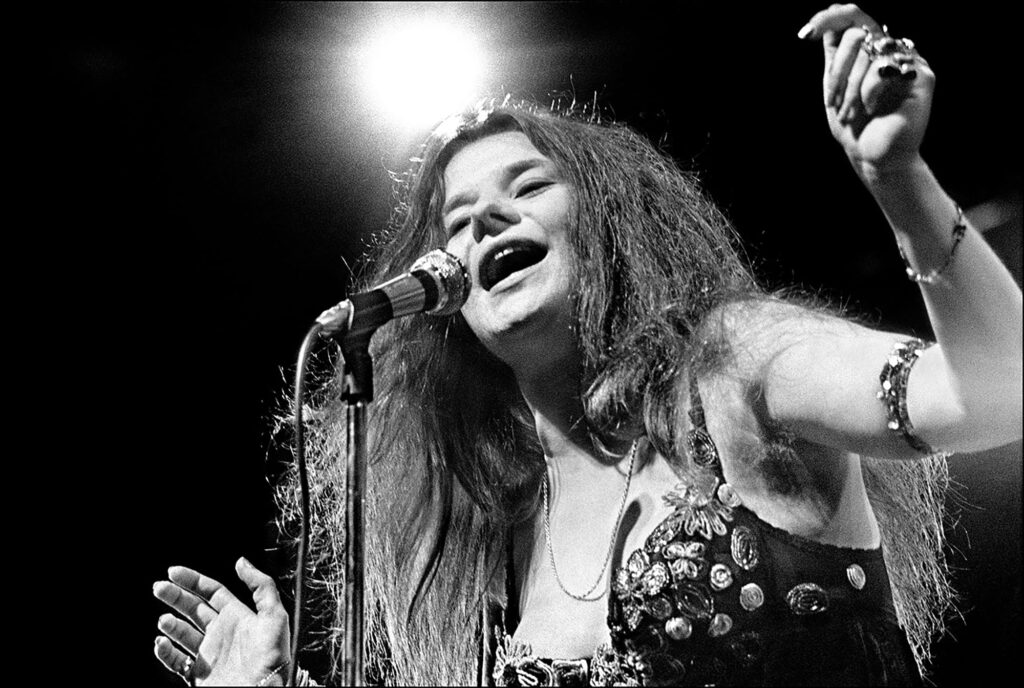
Though Joplin thrived on stage, her relationship with studio recording was more complicated. The energy that made her live performances electric was often difficult to translate into the controlled environment of a studio. Producers struggled to contain her fire without dimming it. Her first album with Big Brother and the Holding Company, “Cheap Thrills”, managed to capture some of her wildness thanks to clever engineering and the band’s anarchic spirit, but even then, critics noted the difference between the live Janis and the recorded one.
Her solo career allowed for more polish and production value, but it also led to an internal conflict. On the one hand, she wanted to evolve, to explore soul, country, and refined arrangements. On the other hand, she feared losing the emotional rawness that had defined her artistry. Her final album, “Pearl,” released posthumously, balanced these tensions brilliantly. Tracks like “Me and Bobby McGee” and “Mercedes Benz” showed a broader vocal range and a more controlled delivery, but still throbbed with emotional depth.
“Pearl” stands today not only as a great rock album but as a testament to Joplin’s evolution as an artist—proof that she could grow without compromise.
Emotion as Protest
Janis Joplin came of age during a period of deep cultural unrest. The Vietnam War, the civil rights movement, the sexual revolution—these weren’t abstract ideas; they were part of the air she breathed. And while she wasn’t overtly political in the way that Bob Dylan or Joan Baez were, her emotional transparency was itself a form of protest. In a society that taught women to stay quiet, look pretty, and smile politely, Janis did the opposite.
She sweat, she screamed, she cursed, and she wept. And she did it all unapologetically. That audacity was political. That freedom was radical. Rock music has always been about defiance, but Joplin’s version of defiance wasn’t just about breaking rules—it was about exposing truth. She didn’t sing about revolution in the streets; she sang about revolutions in the soul.
Her presence in the male-dominated rock scene was a disruption, not just because of her gender, but because of her refusal to conform to the archetype of the polished female entertainer. She became the anti-star, the anti-glamour icon, and in doing so, she reshaped the idea of what stardom in rock could look like.
The Enduring Echo of a Soul on Fire
Janis Joplin died at 27, a member of the now-infamous “27 Club,” alongside Jimi Hendrix, Jim Morrison, and later Kurt Cobain and Amy Winehouse. Her death felt like the end of an era, a loss not just of talent, but of a kind of raw musical honesty that seemed increasingly rare. But death didn’t silence her. If anything, it made her legacy louder.
Her influence lives on in every artist who dares to scream instead of whisper, who bares their soul rather than hide behind production. Artists across genres—from hard rock to folk, from punk to blues—cite her as an emotional touchstone. She made it okay to be messy, loud, and emotionally naked in front of the world.
In many ways, her fire lit the path for future generations, especially women in rock, who found in her not just a role model, but a reason to believe that emotional truth could be its own kind of power.
Conclusion: The Heartbeat of Authentic Rock
Janis Joplin didn’t set out to change the world. She set out to sing the truth of her own. But in doing so, she did more than top charts or sell records—she redefined what rock music could be. Her soul-deep vocals, rooted in blues and bursting with vulnerability, carved a new path for rock that prioritized feeling over perfection, passion over polish.
She was a soul on fire, a voice unbound by genre or gender, and a spirit that refused to be tamed. In an era that demanded masks and roles, she gave us herself, raw and unfiltered. That bravery changed music forever.
To this day, when we talk about authenticity in rock, when we praise singers for pouring their hearts into their songs, we are—whether we realize it or not—speaking Janis Joplin’s language.