The Galapagos Islands are a naturalist’s paradise, home to some of the most unique species on Earth. This archipelago, located 600 miles off the coast of Ecuador, played a pivotal role in shaping Charles Darwin’s theory of evolution due to its incredible biodiversity. Every island hosts a distinct array of wildlife, with creatures that are found nowhere else on the planet which is why you should explore it all through Galapagos luxury tours. From giant tortoises to colorful marine iguanas, a visit to the Galapagos offers an unparalleled opportunity to witness nature’s wonders up close.
The Giant Tortoises: Living Icons of the Galapagos
The giant tortoises are perhaps the most iconic species of the Galapagos. These gentle giants can live over 100 years and are the largest tortoises in the world, weighing up to 500 pounds. There are 15 different subspecies of giant tortoises spread across the islands, each adapted to its unique environment. Some have long necks to reach tall vegetation, while others have shorter necks suited to ground-level foraging.
Visitors can witness these incredible creatures at the Charles Darwin Research Station on Santa Cruz Island or at specially designated reserves. Observing these ancient reptiles is a humbling experience and a reminder of the fragile nature of the Galapagos ecosystem. Conservation efforts have been instrumental in preserving the remaining populations, making the sight of these giants even more special.
Marine Iguanas: The Only Ocean-Swimming Lizards
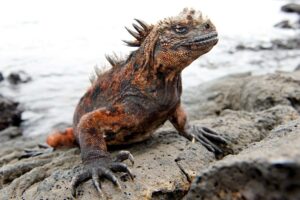
Another fascinating species unique to the Galapagos is the marine iguana, the world’s only seafaring lizard. With their dragon-like appearance, these black, salt-encrusted reptiles may look intimidating, but they are harmless herbivores, feeding primarily on underwater algae. Marine iguanas have evolved flattened tails that enable them to swim gracefully through the ocean, and their ability to expel excess salt through specialized glands gives them their distinctive “spitting” behavior.
You can often see these iguanas sunbathing on rocky shores, warming themselves after a dive in the chilly waters. When snorkeling, lucky visitors might even get a glimpse of these creatures feeding underwater, gracefully navigating the currents with surprising agility. The sight of a marine iguana diving beneath the waves is a testament to the adaptability and resilience of Galapagos wildlife.
Blue-Footed Boobies: The Islands’ Most Colorful Performers
The blue-footed booby is one of the Galapagos Islands’ most charismatic birds, instantly recognizable by its bright blue feet and comical dance rituals. The male boobies use their striking foot color to attract mates, performing an elaborate “high-stepping” display that’s both endearing and amusing to watch. The bluer the feet, the healthier and more attractive the male appears, making the foot color a crucial factor in mate selection.
Blue-footed boobies are found on several islands, including North Seymour, Española, and San Cristóbal. During the breeding season, visitors can observe these fascinating birds engaging in their courtship rituals, which involve synchronized movements, head bobbing, and even offering small gifts like twigs and stones. It’s an unforgettable spectacle that showcases the quirky charm of Galapagos wildlife.
From the lumbering giant tortoises to the agile marine iguanas and the playful blue-footed boobies, the Galapagos Islands are a treasure trove of unique species that continue to inspire awe and wonder. Exploring these islands is like stepping back in time to a world where nature reigns supreme, offering an up-close look at the creatures that helped shape our understanding of life on Earth.