A Shockwave That Started With One Song
When Van Halen released their self-titled debut album in 1978, rock music was already loud, confident, and larger than life. Punk had stripped things down, arena rock had pushed things outward, and heavy blues rock still ruled the airwaves. Yet nothing quite prepared listeners for what exploded out of their speakers when “Eruption” arrived. Clocking in at barely two minutes, it didn’t follow the traditional structure of a rock song. There were no verses to sing along to, no chorus to anchor it. Instead, it felt like a lightning strike, a raw discharge of creativity that sounded less like a composition and more like a moment of musical revelation.
“Eruption” wasn’t just impressive, it was disorienting. Guitarists rewound tapes trying to understand what they had just heard. Casual listeners felt the adrenaline even if they couldn’t explain why. In a genre that had already seen legends like Hendrix and Page, Van Halen somehow sounded like the future arriving early. That brief instrumental didn’t merely introduce Eddie Van Halen; it announced the arrival of a band that would permanently alter the course of rock music.
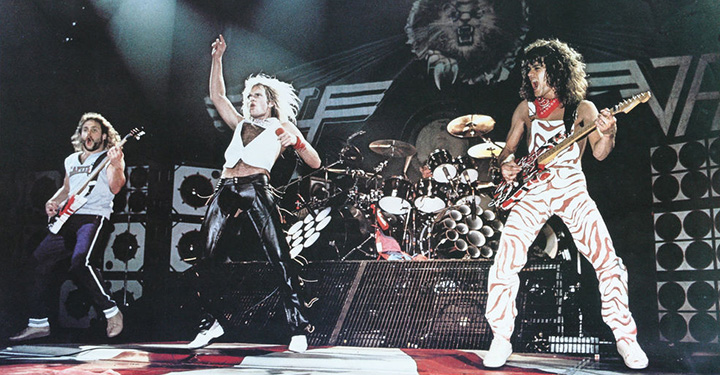
Van Halen as a Band, Not Just a Guitar Phenomenon
Despite how often Eddie Van Halen’s name dominates discussions, Van Halen’s power came from functioning as a unified rock band, not a solo act with backing players. Eddie’s guitar brilliance was framed by Alex Van Halen’s drumming, which swung with a jazz-influenced looseness while still hitting with arena-sized force. His kick drum work and explosive snare gave the band a sense of movement that separated them from the rigid rhythms of many hard rock contemporaries.
Michael Anthony’s bass playing anchored the chaos, but his most underrated contribution was his soaring backing vocals. Those harmonies gave Van Halen’s choruses an anthemic quality, elevating songs like “Ain’t Talkin’ ’Bout Love” and “Dance the Night Away” from simple rock tracks into unforgettable crowd moments.
Then there was David Lee Roth, whose charisma turned musical excellence into spectacle. Roth understood that rock music thrived on personality. His vocal delivery, equal parts sneer and grin, transformed songs like “Runnin’ with the Devil” into declarations of freedom. Without Roth’s theatrical bravado, Van Halen’s sound might have impressed musicians, but it was his presence that helped the band conquer the mainstream.
The Birth of a New Rock Guitar Language
“Eruption” didn’t simply raise the bar for guitarists; it shattered the existing rulebook. Eddie Van Halen introduced techniques that had existed in fragments before, but never with such confidence, clarity, or musicality. Two-handed tapping became his signature, but it was only one part of a much larger approach that blended classical influences, blues phrasing, and reckless experimentation.
Equally important was Eddie’s tone. The “Brown Sound” was thick, warm, and aggressive without being harsh. It sounded alive, almost breathing, and it perfectly matched the band’s kinetic energy. This tone redefined expectations for rock guitar production, proving that distortion could be both heavy and expressive.
The placement of “Eruption” on the album mattered, too. Flowing directly into “You Really Got Me,” Van Halen’s explosive reimagining of the Kinks classic, it symbolized a handoff between generations. The band wasn’t rejecting rock history; they were rebuilding it with more volume, speed, and attitude.
From Club Band to Cultural Phenomenon
Van Halen’s success didn’t come from studio polish alone. Long before the fame, they were a relentless club band, playing night after night in Southern California. That grind shaped their instincts. Their songs were built to move people physically, not just impress them intellectually.
Tracks like “Jamie’s Cryin’” and “Feel Your Love Tonight” captured the band’s ability to write tight, efficient rock songs without sacrificing intensity. Every riff felt purposeful. Every chorus felt earned. Van Halen understood that innovation meant little if the audience wasn’t engaged.
This grounding in live performance gave their records an unmistakable energy. Even through studio speakers, the band sounded like they were inches away, ready to tear through another set. That authenticity helped them transcend trends and connect with listeners who may not have cared about guitar technique but recognized excitement when they heard it.

Reinventing the Rock Frontman Dynamic
David Lee Roth redefined what it meant to be a rock frontman during a transitional era for the genre. Instead of brooding mystique, Roth offered humor, arrogance, and fearless showmanship. He treated the stage like a playground, delivering lines with a wink even as the band behind him roared.
Songs like “Panama” and “Hot for Teacher” showcased this balance perfectly. Roth’s larger-than-life persona never overshadowed the music; it complemented it. He gave the band a visual and emotional focal point, ensuring that Van Halen’s technical brilliance never felt distant or cold.
When Sammy Hagar later stepped in as lead vocalist, Van Halen proved their resilience. The band leaned into a more melodic, polished sound without losing their core identity. “Jump” became one of the most recognizable rock songs of the decade, blending synthesizers with Eddie’s unmistakable touch. Rather than fragmenting their legacy, the shift expanded it, showing that Van Halen could evolve while remaining unmistakably themselves.
Changing the Industry’s Expectations
After Van Halen’s arrival, the rock landscape changed rapidly. Guitar solos became centerpieces rather than embellishments. Young musicians practiced harder, pushed faster, and experimented more fearlessly. Record labels searched obsessively for the next great guitar hero, hoping to replicate what Van Halen had sparked.
Yet many imitators misunderstood the essence of the band. They copied technique but missed the feel. Eddie Van Halen’s playing sounded joyful, spontaneous, and deeply human. Songs like “Unchained” and “Mean Street” weren’t just displays of skill; they were conversations between rhythm and lead, groove and chaos.
Van Halen didn’t just influence how rock sounded, they influenced how it was approached. They encouraged risk-taking and individuality, reminding musicians that breaking rules could lead to entirely new forms of expression.
The Soundtrack of a Generation
Van Halen’s music became inseparable from the cultural fabric of late twentieth-century rock. Their songs blasted from car radios, roller rinks, stadiums, and bedroom stereos. “Panama” captured the thrill of speed and rebellion, while “Jump” crossed genre boundaries and brought rock into pop consciousness without diluting its power.
What made these songs endure was their emotional honesty. They weren’t ironic or overly self-aware. They celebrated confidence, excess, and joy in a way that felt liberating. At a time when rock music sometimes leaned toward darkness or detachment, Van Halen offered pure exhilaration.
Their image mattered too. The band embodied a distinctly American form of rock swagger, blending California sunshine with hard-edged aggression. That combination helped define an era and influenced everything from fashion to stage performance.
A Legacy That Still Reverberates
Long after “Eruption” first stunned listeners, its influence remains woven into modern music. Guitarists across genres still cite Eddie Van Halen as a defining inspiration, but the band’s broader legacy goes beyond any single instrument. Van Halen showed that a rock band could be virtuosic without being pretentious, playful without being disposable.
Their catalog continues to feel alive because it captures something timeless: the thrill of discovery. There’s a sense of possibility in their music, a feeling that anything might happen next. That spirit keeps new generations listening, even decades after the band’s peak.
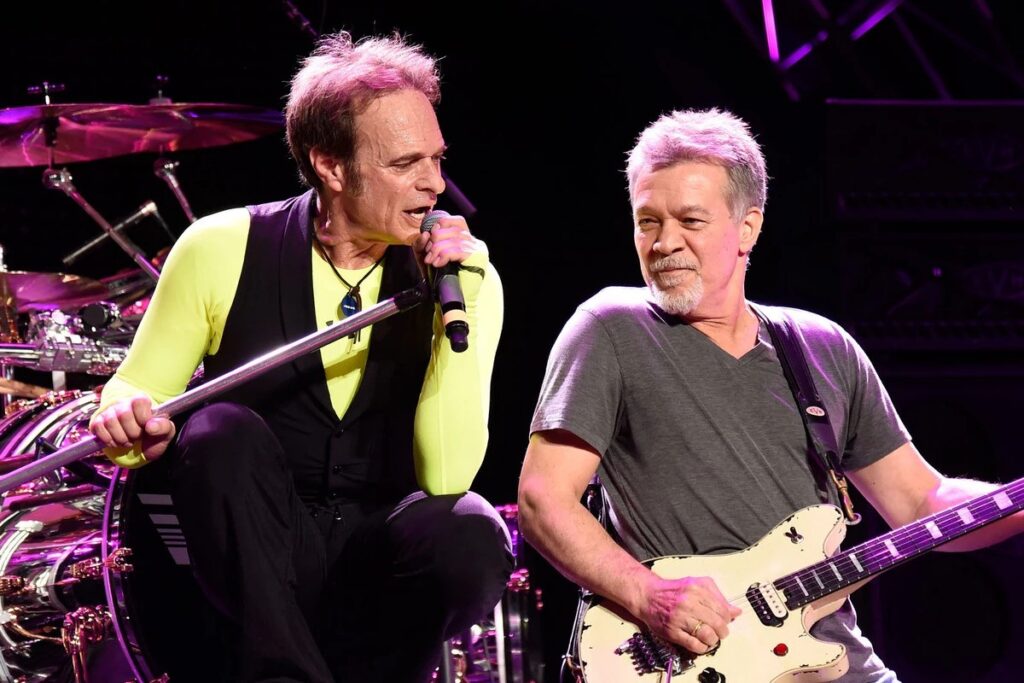
How Van Halen Changed Music Forever
Van Halen didn’t simply redefine rock guitar; they redefined what a rock band could be. They fused technical innovation with showmanship, discipline with abandon, and tradition with fearless experimentation. “Eruption” may have been the spark, but the fire burned through every song, every performance, and every era of their career.
By refusing to choose between skill and soul, Van Halen reshaped the sound and culture of rock music. Their influence lives on every time a guitarist pushes beyond convention, every time a band prioritizes chemistry over perfection, and every time rock music chooses excitement over safety.
That is why the eruption truly was heard around the world, and why its echo still refuses to fade.