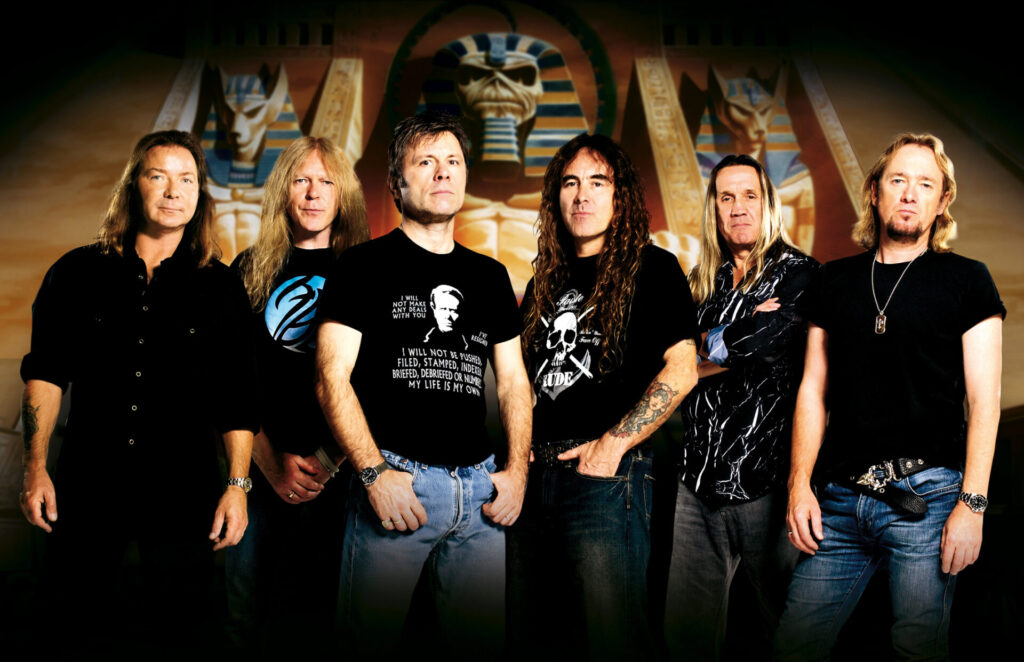
Few bands in rock history have achieved the level of reverence and cultural impact that Iron Maiden commands. Formed in London in 1975, Iron Maiden quickly rose from the gritty pub scene to become one of the most influential forces in heavy metal. While their studio albums have garnered massive acclaim, it is their live performances that truly define the band. Iron Maiden redefined the live rock concert, transforming it from a mere musical showcase into a fully immersive, theatrical, and communal experience for fans around the world.
The Birth of a Spectacle
In the early days of rock concerts, performances often focused primarily on the music itself. Bands would take the stage, play their set, and leave to applause. Audiences were captivated by the sound, but the visual and theatrical elements were minimal. Iron Maiden saw an opportunity to elevate the live concert beyond traditional expectations. They envisioned a performance that engaged all senses—where music, storytelling, visual spectacle, and fan interaction converged to create an unforgettable experience.
Iron Maiden’s early tours demonstrated their commitment to theatricality. The band introduced elaborate stage setups featuring towering backdrops, dynamic lighting, and, most importantly, Eddie, their iconic skeletal mascot. Eddie appeared in various forms to surprise and thrill audiences, from towering puppets to animatronic versions synchronized with the music. More than just a visual gimmick, Eddie became a symbol of the band’s identity, connecting fans across generations and countries. Each appearance of Eddie transformed a song into a narrative moment, giving the audience not only music but a story to witness unfold in real time.
Pushing Musical Boundaries Live
While many bands rely on studio perfection to drive their fame, Iron Maiden understood that live performance is an art form in its own right. Their concerts are known for impeccable musicianship, with complex arrangements that often surpass even the studio recordings in energy and intensity. Steve Harris’ galloping basslines, Dave Murray and Adrian Smith’s intricate guitar harmonies, and Bruce Dickinson’s soaring vocals come together to create a sound that feels monumental in a live setting. The band’s commitment to precision and endurance is staggering; many of their shows last over two and a half hours, yet they maintain extraordinary consistency and vitality.
Iron Maiden’s approach to live performance challenges traditional notions of what a concert should be. Their shows are not just about technical prowess; they are designed to take fans on a journey. Every setlist is carefully curated to balance tempo, mood, and thematic content. Faster, aggressive tracks ignite the crowd, while slower, more melodic songs offer moments of reflection and connection.
Redefining Stage Production
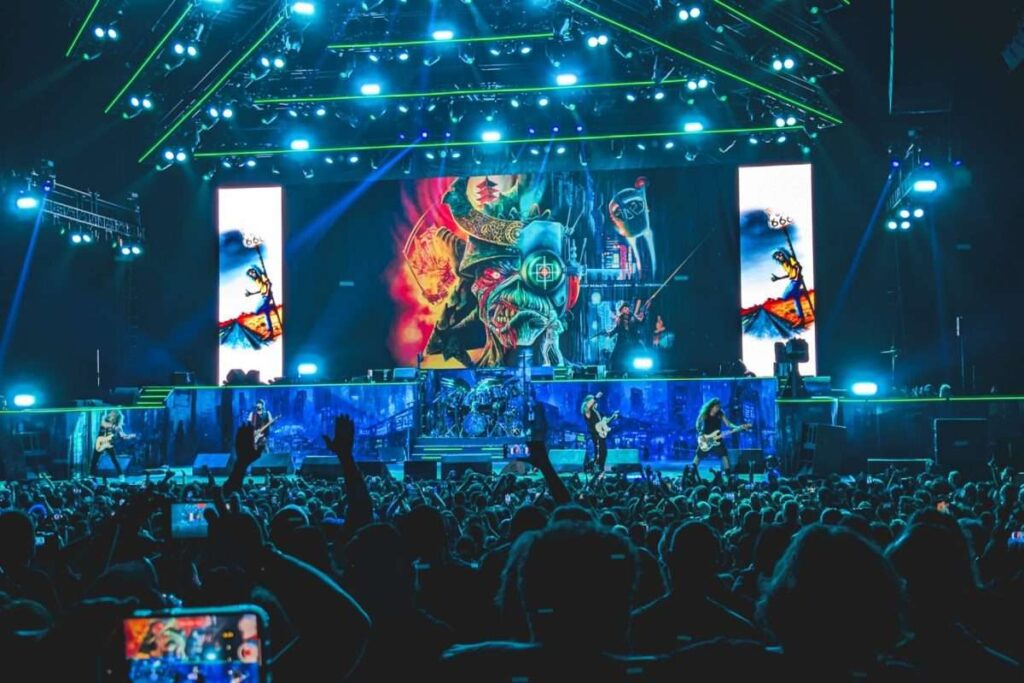
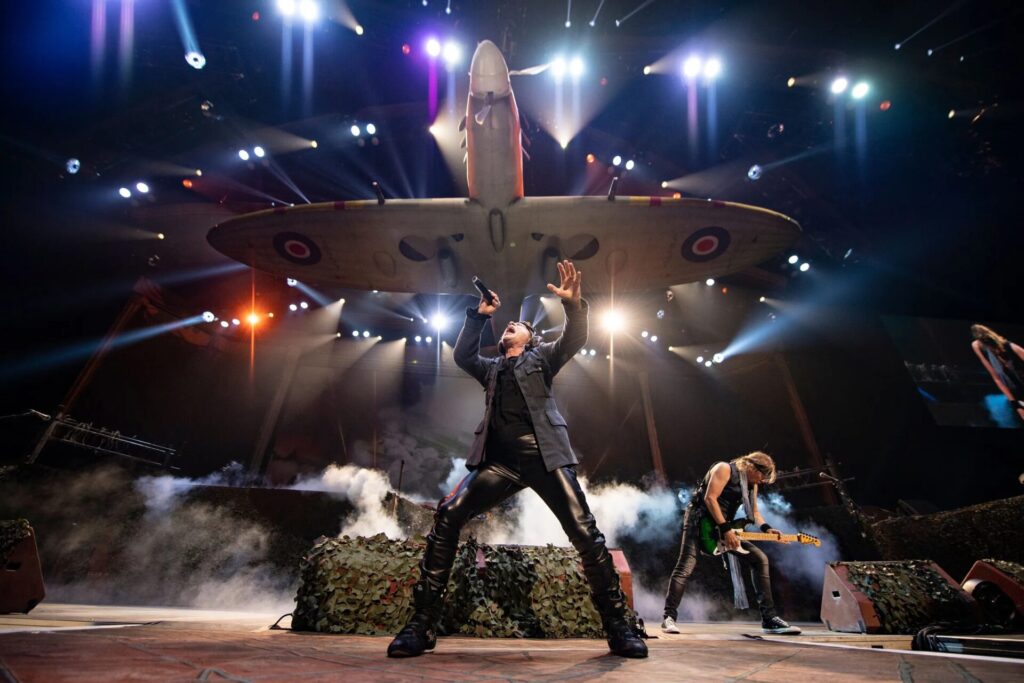
Iron Maiden’s approach to stage production is nothing short of revolutionary. Their concerts are known for elaborate stage designs, pyrotechnics, and cutting-edge lighting effects that transform the venue into a dynamic, living environment. Unlike many rock shows that rely on static backdrops or minimal props, Iron Maiden treats the stage as a canvas. Each tour features a unique theme or concept, often reflecting the narratives of their latest album. For instance, tours promoting concept albums like Seventh Son of a Seventh Son incorporated intricate ice-themed props and mystical visuals, enhancing the storytelling inherent in the music. This attention to detail ensures that no two shows are exactly alike, giving fans a reason to experience the band live multiple times.
The use of pyrotechnics, smoke, and synchronized lighting is not merely decorative—it enhances the emotional impact of the music. During songs like “The Number of the Beast” or “Hallowed Be Thy Name,” visual effects are timed to the rhythm and intensity of the performance, creating moments of awe that linger in memory long after the final chord. The interplay of sound, light, and stagecraft elevates the concert from a standard performance into a multi-sensory spectacle. This combination of musical precision and visual innovation has inspired countless bands to view their concerts not merely as shows, but as complete, immersive experiences.
The Role of the Audience
Iron Maiden’s concerts are remarkable not only for their production but also for the way they engage the audience. Bruce Dickinson, in particular, has mastered the art of connecting with fans, treating the stage as a dialogue rather than a one-way performance. His charismatic presence, coupled with the band’s willingness to interact with the crowd, transforms attendees from passive listeners into active participants. Fans sing along to every word, wave their arms in unison, and react to every dramatic moment, creating a collective energy that amplifies the power of the music.
The audience becomes a key element of the performance, shaping the energy and flow of the show. Fans travel across countries and continents, forming a global community bonded by shared experiences of live concerts. The rituals of chanting, synchronized clapping, and waving flags all reinforce the communal atmosphere. By prioritizing audience interaction, Iron Maiden elevated concerts from passive listening events to participatory cultural phenomena, where the energy of the fans is inseparable from the power of the performance.
Cultural Impact and Fan Legacy
Iron Maiden’s impact extends far beyond the concert hall. They cultivated a fan culture that thrives on shared identity, collective memory, and devotion to the band’s ethos. Fans proudly wear the band’s imagery, especially Eddie, as symbols of belonging to a global rock community. Iron Maiden’s concerts became pilgrimage sites for fans, who viewed each show as a ritualistic gathering celebrating music, identity, and continuity. Unlike many bands whose influence fades after their initial success, Iron Maiden built a culture that spans generations, with parents introducing children to the live concert experience that defined their own youth.
The band’s influence is also visible in the evolution of rock concerts as a whole. Before Iron Maiden, large-scale theatrics were mostly associated with progressive rock or glam acts. Iron Maiden demonstrated that heavy metal could command the same grandeur and spectacle while maintaining musical integrity. They set a new standard for live rock performance, inspiring artists from Metallica to Avenged Sevenfold to elevate their own stagecraft and audience engagement. The idea that a concert could be a shared, transformative experience owes much to Iron Maiden’s pioneering vision.
Longevity and Evolution
One of the most remarkable aspects of Iron Maiden’s live performances is their longevity and evolution. Over four decades, the band has continuously refined and reinvented their concerts to keep pace with changing expectations and technological advancements. From small club shows to stadium-filling spectacles, Iron Maiden has maintained a consistent commitment to excellence and innovation. Their ability to evolve while remaining true to their core sound is a testament to their understanding of what makes live performance truly unforgettable.
They were among the first rock bands to integrate large-scale video screens, immersive lighting rigs, and elaborate props, setting a standard for what fans now expect from major live tours. But Iron Maiden’s innovations go beyond technology—they experimented with theatrical storytelling, narrative-driven setlists, and thematic tours that reflect the content of their albums. Their emphasis on the full concert experience—sound, visuals, audience interaction, and narrative cohesion—has influenced generations of performers to think of concerts not merely as recitals but as fully realized artistic events.
The Legacy of Iron Maiden Live
Iron Maiden’s influence on live rock concerts cannot be overstated. They showed the world that a concert could be an event, a narrative, and a shared emotional journey rather than simply a series of songs played in succession. Bands like Metallica, Slayer, and Avenged Sevenfold have cited Iron Maiden as a major inspiration for their approach to live performance. Their legacy is evident in the proliferation of large-scale, theatrical rock shows that dominate arenas and festivals worldwide.
Beyond technical and aesthetic innovation, Iron Maiden redefined what it means to connect with fans through performance. Their concerts are celebrations of music, storytelling, and community, where each show is a unique experience shaped by the audience’s energy and the band’s artistry.
Conclusion
Iron Maiden did not simply perform rock concerts—they reimagined them. By combining exceptional musicianship, elaborate stage production, audience engagement, and narrative depth, they transformed live shows into immersive spectacles. Their pioneering approach set new standards for what fans expect from a rock performance, influencing countless artists and redefining the cultural significance of live music. Each concert is a testament to their vision, a celebration of heavy metal’s power, and a reminder that the stage is not just a platform for music—it is a canvas for storytelling, emotion, and human connection.
Through decades of relentless touring, innovation, and showmanship, Iron Maiden proved that the live rock concert is not just entertainment—it is an art form. Their influence continues to resonate, ensuring that every time the lights dim and the first notes hit, audiences around the world are witnessing something extraordinary. From their groundbreaking stage designs to their immersive storytelling, Iron Maiden’s legacy is a testament to the transformative power of live rock music.